



Mastic: The Demanding Crop Sustaining Chios
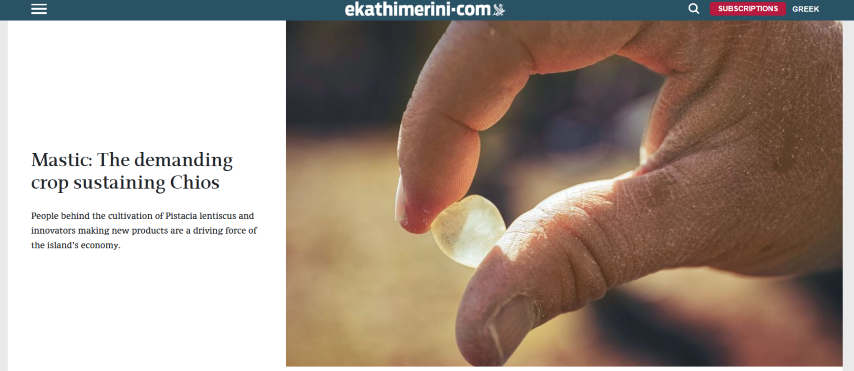
People behind the cultivation of Pistacia lentiscus and innovators making new products are a driving force of the island’s economy. Tough, demanding and collective by its very nature, mastic, or mastiha in Greek, is a business that calls for a lot of hands. From tending and scoring the trees, to harvesting the resin and cleaning it, it’s a process that demands patience, precision and care.
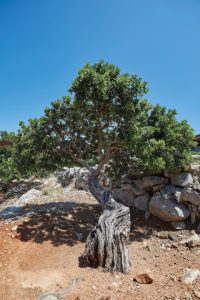
In the mastic-growing villages of southern Chios, entire families work together to bring in the crop. Young and old, everyone is essential. This is why every root of Pistacia lentiscus is more than a tree; it is part of the family, part of the islanders’ identity.
It is this intrinsic relationship that makes the wildfires that swept across the island this summer all the more devastating. The damage is not just economic but symbolic, because the mastic tree is unique to this tiny part of the world.
All Hands on Deck
We traveled to Chios to meet the people behind the island’s mastiha production: local families, museum representatives, cooperative members, producers, and the people working to connect Chios mastiha with the future.
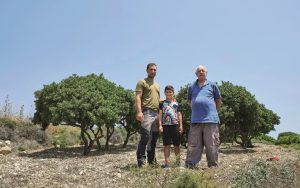
The mastiha business has seen an influx of younger people in recent years, after official recognition of its medicinal properties boosted prices and demand, making its prospects more attractive to younger generations.
The Chios Mastiha Growers Association, founded in 1938, remains the world’s only exporter of this particular commodity. Producers rely on the association for every step, from harvest to packaging and price negotiation — and, most importantly, for support and stability.
At the same time, Mediterra has helped bring mastiha to foreign markets and supported the development of new products made with this unique resin, from cosmetics and herbal teas to alternative medicines.
In the Field
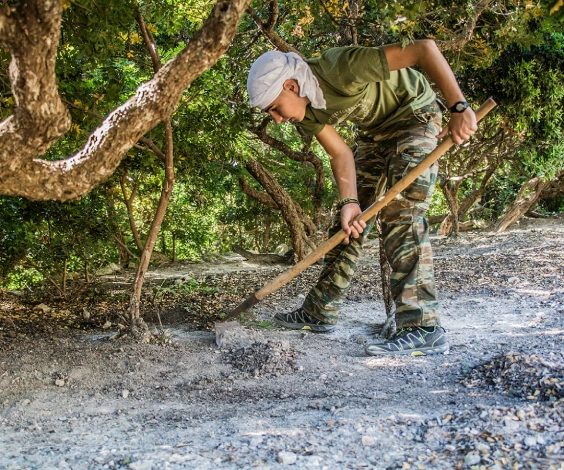
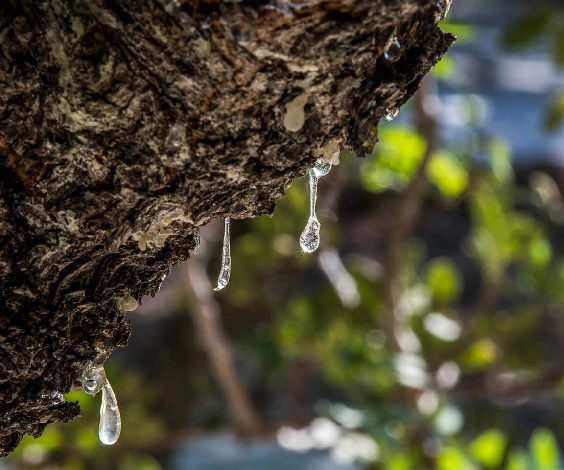
During the visit in mid-June, the groves were being prepared through the process known as “cleaning the table,” where the ground beneath the trees is cleared and covered with inert calcium carbonate. The most important phase begins in early July and involves scoring the trees to release the resin — a process known as “embroidering” to produce the famous mastiha “tears.”
Human intervention causes the tree to produce resin in order to heal itself. If the cut is too deep, the tree may dry out; if it is too shallow, it will not produce enough resin. This delicate balance is part of what makes mastiha cultivation so intimate and demanding.
Once the resin appears, it is left to harden on the tree. In the fields, the drops sparkle like crystals, before being collected carefully by the growers.
Strengthening the Community
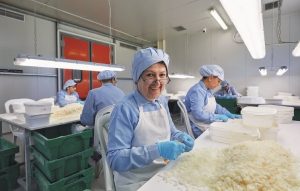
Once the resin is collected, it is washed and cleaned by hand — a painstaking and exacting task that determines its final quality. Every mastic tree requires as many as 15 visits by the producer in a season, explains Lenia Ziglaki from Mesa Didima, who took over her father’s trees and launched the Mastiha Roots adoption initiative.
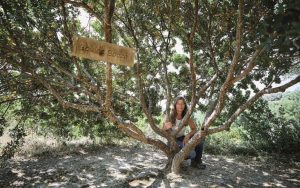
A portion of the contributions sent by sponsors returns to the growers and the local community through targeted initiatives. In essence, Mastiha Roots is building an international community of producer-supporters.
Today, mastiha cultivation faces two major challenges: climate change and overcultivation. Yet through training, renewed knowledge, and producer support, the sector is being strengthened for the next generation.
Where once it was considered difficult and even undesirable work, today there is pride in tending the mastiha trees.
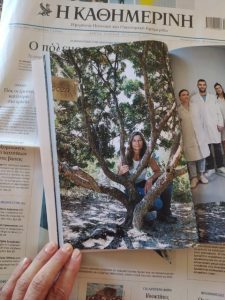

Appreciation Message
We were deeply moved to be included among those who carry this tradition forward — alongside the president of the Chios Mastiha Growers Association, the researchers, the women who clean each tear with care, and every person who works quietly and tirelessly to preserve this heritage.
To the editors, writers, and everyone who brought this beautiful tribute to life, thank you. And to everyone who continues to show love and respect for mastiha, your support keeps this living tradition alive and rooted in purpose.


